

INTRODUCTION
Sands, as a rule, are characterised by a low content of organic matter, which substantially affects their physical and chemical properties, making them less suitable for agriculture and ecosystems. The low content of organic matter in the sands also means a low content of nutrients necessary for plants to grow and develop; humus and other organic components enrich the soil with nitrogen, phosphorus, potassium, and other elements that are vital to plant nutrition. In the absence of organic material, sandy soils have a less stable structure, they are prone to loosening and erosion by wind and water, which increases their vulnerability to desertification and degradation (Kravchuk et al., 2024; Yzakanov et al., 2024).
The problem of this study is that sandy soils are usually poor in organic matter, which makes them less fertile and resistant to erosion. The microbiological approach is aimed at introducing microorganisms capable of improving soil structure and increasing humus content, but the effectiveness of this process may depend on local climatic and soil conditions. Additionally, the introduction of microbiological technologies requires systematic monitoring of the state of the soil and microbiological communities. This is necessary to evaluate the effectiveness and adaptation of methods to changing conditions, which can be difficult in remote and hard-to-reach regions. It is necessary to focus on several key aspects of their water and nutrient regime, improving moisture and absorption capacity to increase the fertility of sandy and sandy loam soils. Sandy and sandy-loamy soils have high water permeability, which leads to rapid water runoff and insufficient moisture retention in the root layer. These soils do not retain moisture well due to their coarse-grained structure and lack of organic substances. The application of organic fertilisers, such as compost, manure, or humus, improves the structure of the soil, increasing its ability to retain water. Organic matter forms humus, which improves the water-retaining properties of the soil. Adding 10-20 tonnes of compost per hectare twice a year helps to retain moisture and improve soil structure (Kusherbayev et al., 2023).
The problem existing in the area under study, the arid regions of Central Asia, is that there is a huge lack of modern knowledge and technologies to combat man-made desertification. Matvafayeva (2024) identified that man-made desertification is caused by a number of factors, including industrial pollution, excessive water consumption, deforestation, agricultural activities, and infrastructure construction, and Tukhtaeva & Zulfiev (2024) emphasised that climate change, such as an increase in the frequency of extreme weather events, droughts, and floods, intensifies desertification processes and complicates the choice and implementation of protective measures. Gaps requiring further study also include the development of regional models for predicting climate change and its impact on soil and water resources. Analysing the role of microorganisms and their interactions with vegetation in improving soil structure and increasing fertility is also important. Kusbergenova et al. (2024) and Dauletkul et al. (2024) analysed and developed strategies for the conservation and restoration of degraded ecosystems, such as planting of native plant species and restoration of natural reservoirs. Sonaev et al. (2024) carefully analysed and established a relationship between the amount of sand transported and wind speed. This is of great importance for the examination of desertification processes since wind erosion is one of the main factors contributing to land degradation. Gaps requiring further investigation include the assessment of the effects of various types of organic fertilisers (compost, manure, green fertilisers) on the soil microbiome, biodiversity, and soil structure. There is a need for further research on the resilience of biodiversity systems to climate change and their ability to recover from stress.
Another urgent problem related to arid regions of Central Asia is that sandy soils often have a low ability to retain nutrients, including phosphates, which reduces their availability to plants. Zakirova et al. (2024) presented a methodology for determining the optimal application rates of phosphorus fertilisers for various crops and conditions to ensure their effective use and reduce losses. Araujo et al. (2024) and Xie et al. (2024) studied sandy soils that are particularly susceptible to nutrient leaching, including phosphates, especially during heavy rainfall or irrigation. They also identified phosphate fixation in forms that are inaccessible to plants as a significant issue, highlighting the need for research and methods to address this problem. The effectiveness of various forms of phosphorus fertilisers (for example, superphosphate and diammophosphate) in sandy soils and their effect on the dynamics of mobile phosphates and digestibility by plants require additional assessment.
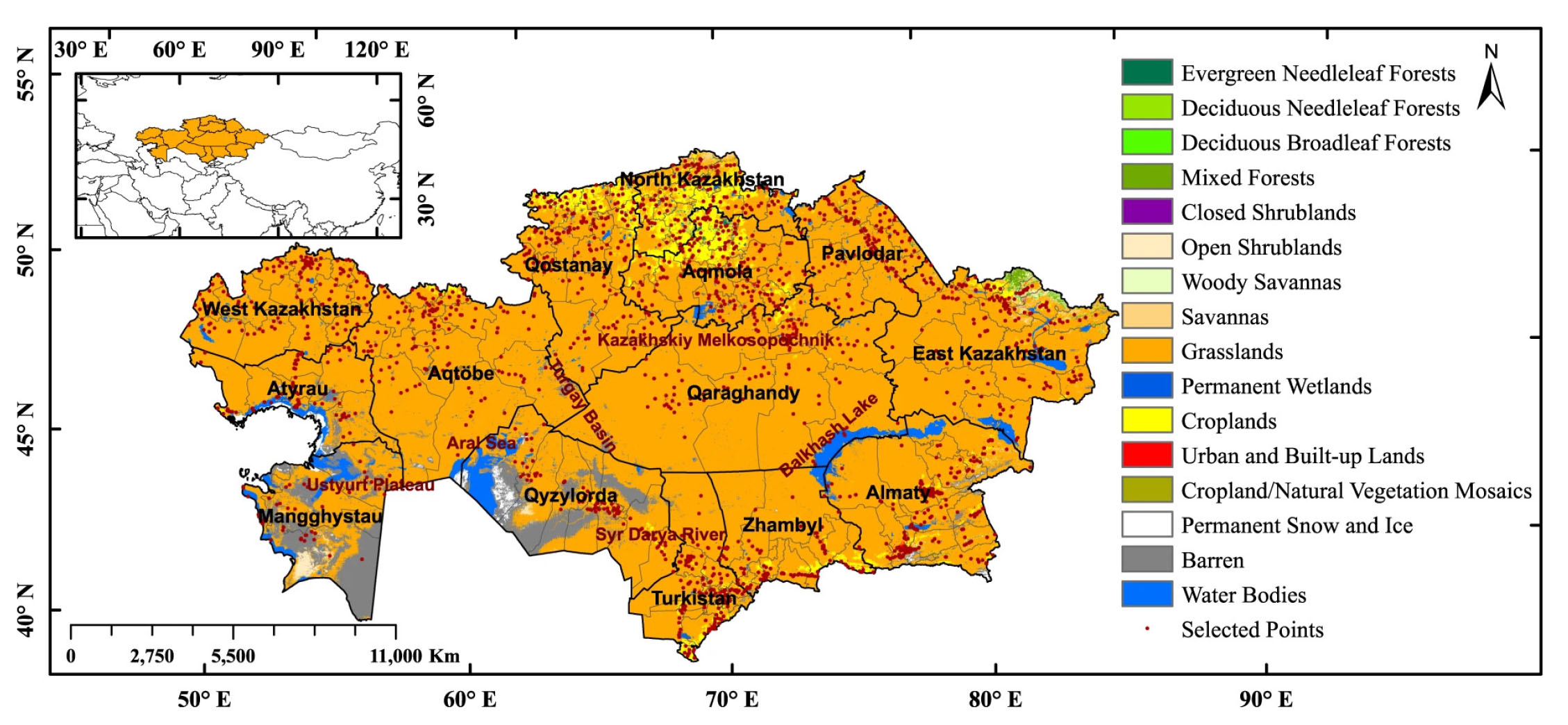
Research in the field of developing technology for strengthening sands and eroded soils to protect sandy territories from desertification using a microbiological approach allows not only the prevention of land degradation but also the introduction of microbiological technologies that improve soil structure, increase the content of organic substances and nutrients, which in turn increment its fertility and crop productivity. The use of microbiological methods will reduce the need for chemical fertilisers and pesticides, which helps to reduce soil and water pollution and improve environmental quality. Microbiological agents contribute to the formation of a biological crust on the soil surface, reducing erosion and promoting better moisture retention, which is especially important in arid areas. The purpose of this study is to develop effective and sustainable technologies for strengthening sands and eroded soils using microbiological approaches to protect sandy areas from desertification and degradation. The following tasks were identified to achieve this goal: examine various types of bacteria, fungi, and other microorganisms that can contribute to the strengthening of sandy and eroded soils and the assessment of their effectiveness in creating a biological crust and improving soil structure. This study was conducted in the arid regions of Kazakhstan, particularly focusing on the sandy areas near the city of Aktau (Fig. 1).
- Land cover map of Kazakhstan. Source: compiled by the authors.
MATERIALS AND METHODS
As part of the study, a qualitative analysis of threats and vulnerabilities associated with the degradation of sandy territories was conducted. The analysis identified and classified the main security threats, such as soil erosion, reduced fertility, loss of biodiversity, and deterioration of water retention capacity. This allowed to develop targeted microbiological technologies for the effective protection and restoration of sandy areas. The study focused on investigating and classifying threats associated with the use of various technologies and methods for strengthening sandy and eroded soils in regions prone to desertification, with an emphasis on microbiological approaches. To develop recommendations for improving the processes of implementing safety measures when using microbiological methods, control soil samples were included for comparative analysis.
A critical review of various technologies using strains of bacteria and fungi known for their ability to strengthen soil was conducted. Bacteria such as Bacillus spp., Pseudomonas spp., and fungi like Trichoderma spp. were evaluated for their role in developing methods for strengthening sands and eroded soils in areas prone to desertification. The effectiveness of these methods was assessed through a series of steps and methodologies. Each technology and method was analysed, considering their potential and limitations in real-world application conditions. Key characteristics, such as the ability of commercially available biologics to prevent specific types of soil degradation, were evaluated. The study focused on technologies and methods that have been proven to perform well under field conditions.
The analysis also included testing of technologies for their resistance to organic and mineral fertilizers, ensuring a suitable environment for microorganisms and plants involved in the soil strengthening process. Laboratory-based evaluations were conducted to assess the capabilities of special solutions for cultivating microorganisms under controlled conditions. A significant aspect of the study was to compare the impact of each technology on the productivity of the nutrient medium used to cultivate microorganisms for sand strengthening methods. Delays associated with the introduction of technologies and the convenience of using standard microbiological instruments, such as microscopes, centrifuges, autoclaves, and incubators, were also considered in the development of soil strengthening technologies.
The specifications and needs of the project, along with potential risks, were taken into account when choosing the necessary equipment for soil sampling. This included drilling rigs, shovels, and containers. Within the scope of the study, a detailed analysis of existing standards and procedures for the safe use of instruments to measure soil properties was conducted. This included moisture and density meters used in the context of microbiological approaches. The safe use of field testing equipment, including systems for applying biological products and irrigation installations, was reviewed as part of the development of sand reinforcement technology. The study area, located in the arid regions of Kazakhstan, specifically around the city of Aktau (Fig. 1), was considered in all stages of the sampling and analysis process. Recommendations for soil sampling from depths of 0-30 cm in various sandy areas were made, and both successful and unsuccessful practices were evaluated, considering the processes of drying and sieving soil samples to remove large particles and organic material.
RESULTS
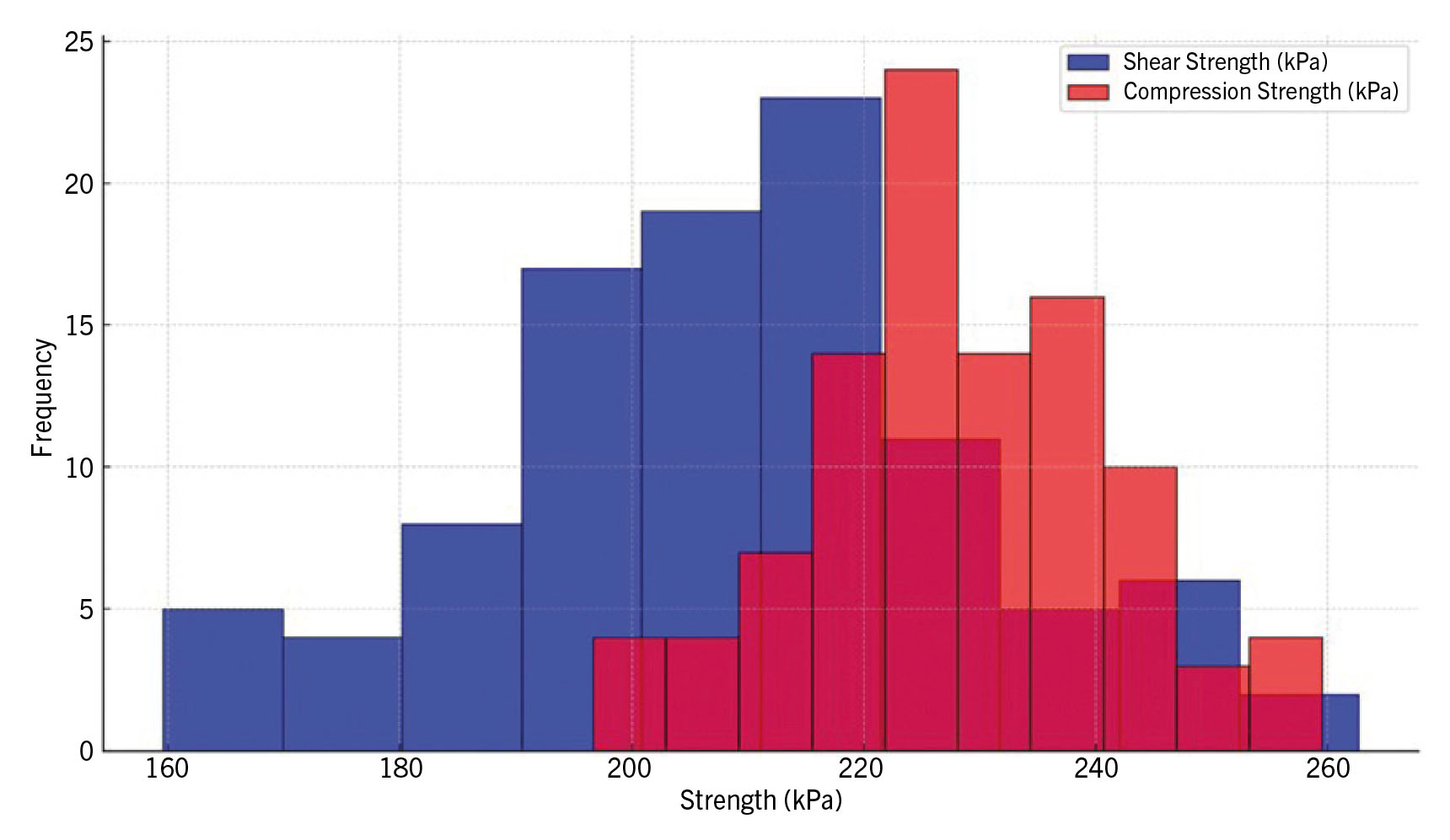
The first work was to characterise sand samples obtained from the sites where further studies were carried out. The samples were analysed for indicators relevant to the study. The results are shown in Table 1. Figure 2 presents the distribution of shear strength and compression strength values across the soil samples, providing insights into the variability and central tendencies of these critical soil properties.
| Indicator | Unit of measurement | Value |
|---|---|---|
| pH | 8.2±0.12 | |
| Total dissolved solids | ‰ | 455±5.7 |
| Cl | ‰ | 40±0.15 |
| SiO2 | % | 57±1.1 |
| CaO | % | 1.5±0.2 |
| CaCO3 | % | 1.5±0.2 |
| Density | mg/cm3 | 1.5±0.05 |
| Compression strength | kPa | 227±12.5 |
| Shear strength | kPa | 210±10 |
- Distribution of shear and compression strength in soil samples
Sandy soils have high water permeability due to their coarse-grained structure. This means that water can quickly infiltrate the deep soil horizons, but it can also dry out quickly due to low soil ability to retain moisture. The basic physical properties of sandy soils, such as high permeability and low water retention capacity, affect the distribution and use of water resources. Water infiltration into sandy layers can contribute to the rapid formation of groundwater aquifers, but it also increases the risk of erosion and the loss of the fertile layer. The examination of the permeability of sandy soils helps to develop strategies for managing agriculture and environmental adaptations, for example, through the use of irrigation techniques that consider high soil permeability or through the introduction of methods to protect the soil from erosion. The application of phosphorus fertilisers to sandy soils is an important agrotechnical practice aimed at increasing their fertility and improving crop yields. The introduction of phosphorus fertilisers (such as superphosphate, phosphorous flour) into the soil provides plants with the necessary elements for their growth and development. Phosphorus plays a key role in the processes of energy exchange, photosynthesis, and root system formation. Mobile phosphorus is a fraction of phosphorus in the soil that is available to plants (Wang et al., 2024).
Biocementation is an innovative technology that uses biological processes to improve the mechanical properties of soil, especially sand. The main aspects of biocementation include the use of microorganisms to create cementing agents that bind grains of sand and improve the strength characteristics of the soil. Biocementation is based on the ability of some microorganisms to produce calcite through biochemical processes (Kusbergenova et al., 2024). These microorganisms include bacteria such as Sporosarcina pasteurii, which are involved in the processes of ureolysis and denitrification. Calcite forms crystals that bind sand particles, improving the soil mechanical properties. The urease test is a microbiological test used to determine the ability of microorganisms, in particular, bacteria, to produce the enzyme urease (Kusbergenova et al., 2024). Urease catalyses the hydrolysis of urea to ammonia and carbon dioxide. This test is especially useful for the identification of bacteria of the Proteus, Helicobacter pylori genera and other urease-positive microorganisms. This test shows the ability of bacteria to break down urea using the enzyme urease. Urease decomposes urea into ammonia and carbon dioxide. Urea broth is a buffered solution of yeast extract and urea, with phenolic red as a pH indicator. Since urea is unstable and breaks down during autoclaving, it is usually sterilised by filtration. This medium is known as Christensen’s agar medium.
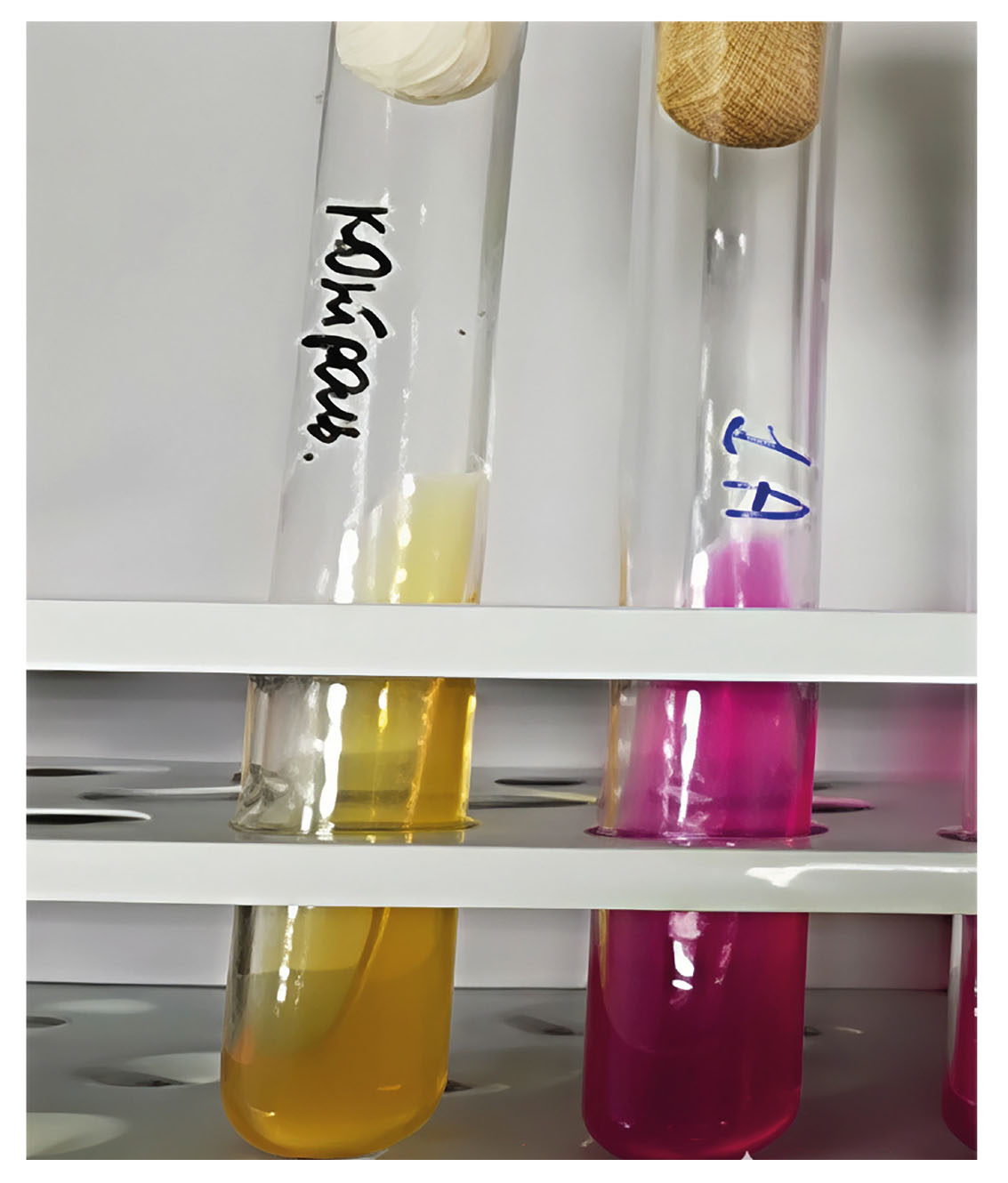
The test is performed to determine the presence of urease in microorganisms and their ability to utilise urea. The medium was poured into test tubes, creating a bevelled agar, which was then seeded with bacteria and incubated at 28°C for 48 hours. The positive result was determined visually by the change in the colour of the medium from yellow to crimson (Fig. 3). Based on the results of the analysis, the strain with the highest urease activity was selected: Bacillus cereus. Urease activity was measured using a conductometric method using a Consort C932 conductometer (Belgium).
- The growth of the isolate in the Christensen environment. On the left – control; on the right – a positive result reflecting the presence of urease activity of the isolate.
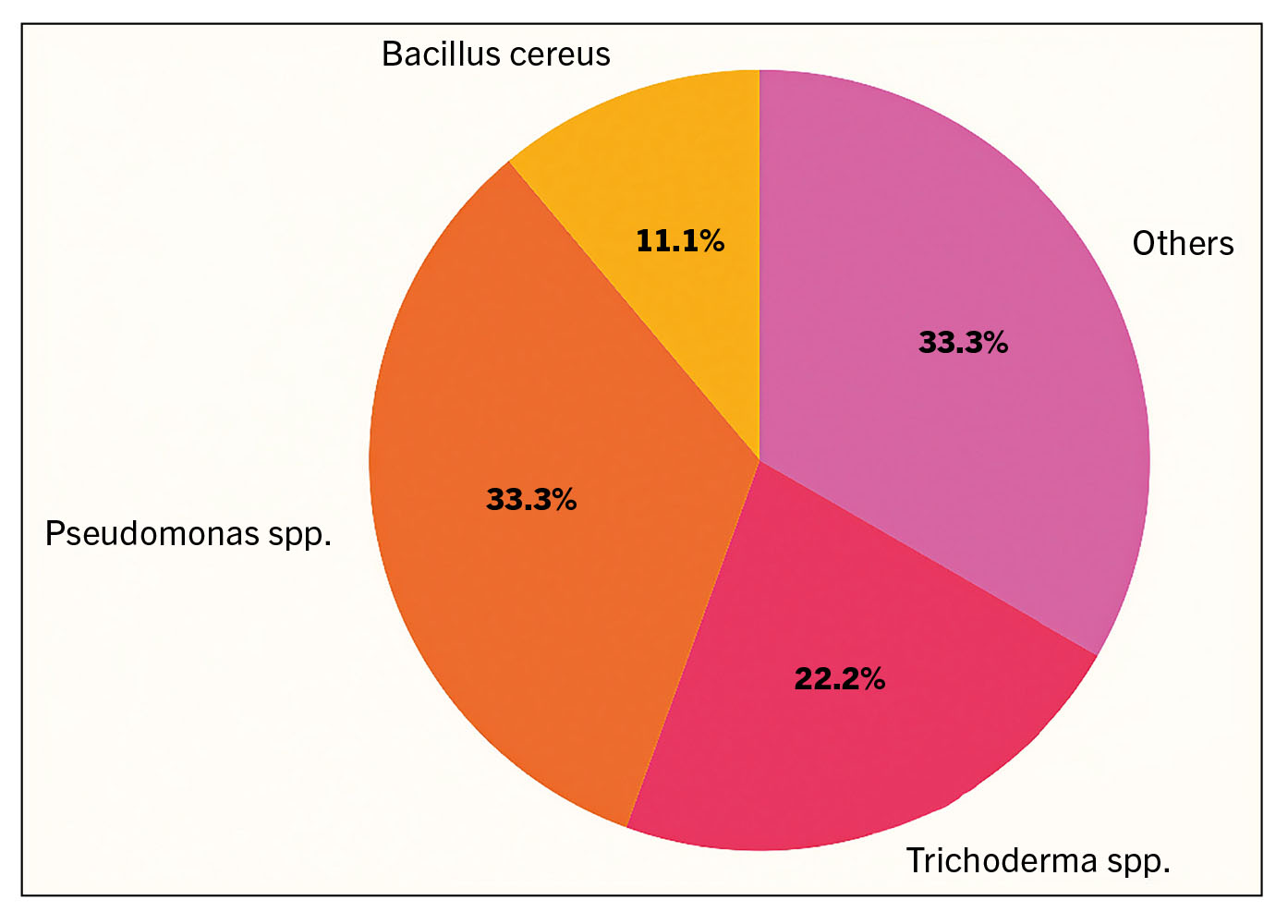
During the soil study, 9 microorganisms were isolated, and one strain with the highest urease activity was selected for further use in biocementation (Fig. 4). The process of isolation and analysis included several stages, from soil sampling to testing of urease activity. Soil samples were taken from various sandy areas prone to erosion and desertification. Samples were collected at a depth of 0-30 cm to obtain representative isolates of microorganisms. Microorganisms were isolated from each soil sample by cultivation on selective media. The isolated colonies were checked for purity and identified by morphological and biochemical characteristics (Hang et al., 2024). A conductometric method was used on the Consort C932 device to assess urease activity. Of the 9 isolated isolates, the degree of urease activity was determined by measuring the change in the electrical conductivity of the medium during the decomposition of urea. The most active strain was identified as Bacillus cereus. The urease activity of each isolate was measured repeatedly to confirm the results. The effect of various conditions on enzyme activity, including temperature, pH, and urea concentration, was evaluated. Based on the data obtained, one strain with the highest urease activity was selected for further experiments on biocementation in the field. Biocementation involves the use of microorganisms to strengthen sandy soils by forming calcite (CaCO3), which improves the mechanical properties of the soil and reduces its susceptibility to erosion. Isolation and testing of the urease activity of isolates of microorganisms are important for the development of biocementation technologies. Bacillus cereus, which has shown the highest urease activity, can be used to: i) improve the mechanical properties of sandy soils, ii) reduce erosion, iii) strengthen soil in arid and desertification regions, and iv) have environmentally friendly methods of soil stabilisation (San Pablo et al., 2024).
- Distribution of microorganisms isolated in the study.
Isolation of strains of microorganisms with high urease activity opens up prospects for the introduction of innovative biotechnologies in agriculture and ecology. This study is an important step towards developing effective methods to combat desertification and soil degradation. Sand sifted through a sieve from Aktau city (particle size/sieve size is not specified) was placed in plastic cups with a height of 70 mm and a diameter of 45 mm; 175 g of sand was loaded into each glass. The top of the cup remained open, and in the lower part, there was a hole that was closed with a cork. Through this hole, a bacterial suspension was injected under pressure, which soaked all the sand. There was a decrease in the volume of sand and the appearance of free spaces inside. The sand was compacted by mechanical blows from above to eliminate these voids. After compaction, the sand was left at a temperature of 25 °C for 24 hours. Urea and calcium chloride were added and then dried at room temperature (Fig. 5) to strengthen the sand.
- Biocementation: a) biocementation process, b) biocementation result.
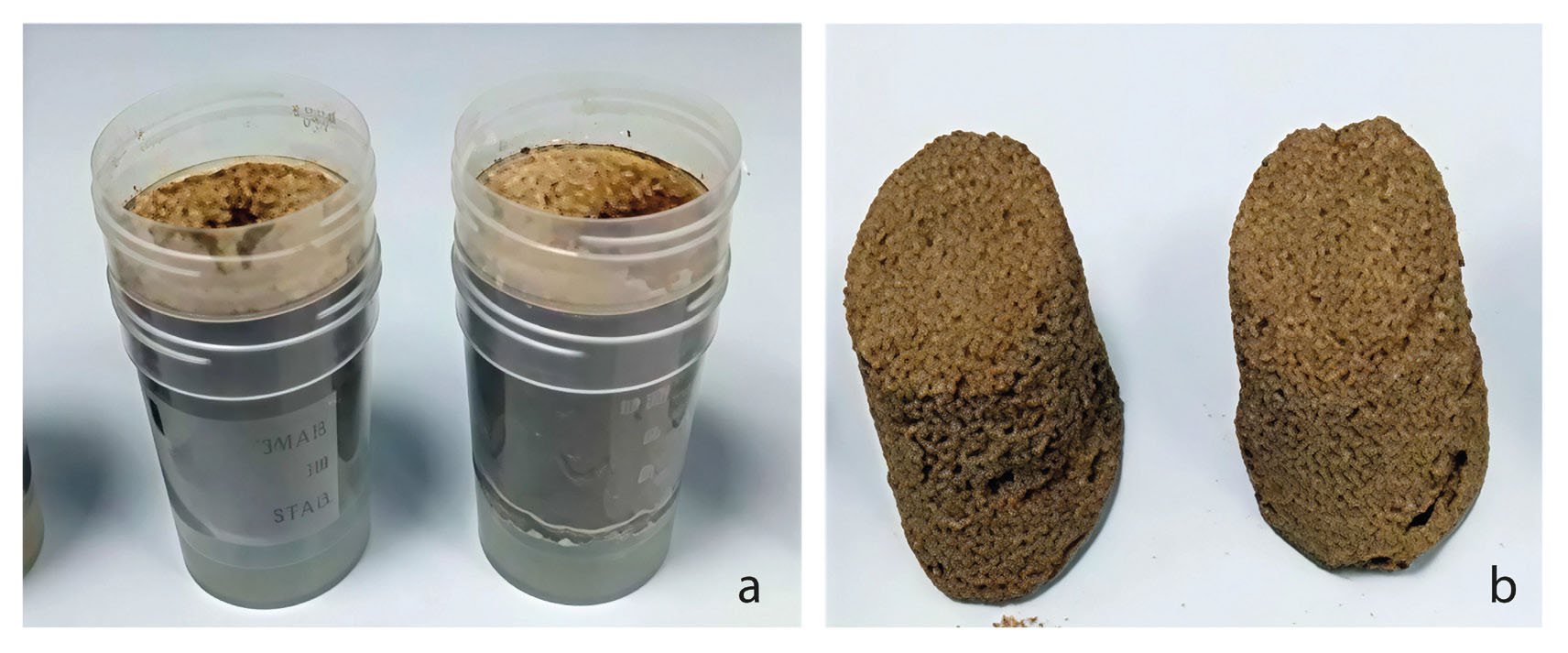
The biological process of sand biocementation, also known as microbiological induction of calcium carbonate, has shown substantial potential in geotechnical engineering research (Dauletkulet al., 2024). This method is aimed at strengthening sandy and eroded soils to increase their strength and resistance to erosion processes. Biocementation is based on the ability of some microorganisms, such as bacteria of the genera Bacillus and Sporosarcina, to produce the enzyme urease. This enzyme catalyses the hydrolysis of urea to ammonia and carbon dioxide, which leads to a local increase in pH and the formation of calcium carbonate (CaCO3) from dissolved calcium ions. Calcium carbonate precipitates around the grains of sand, binding them and forming a cementing layer, which increases the strength and stability of the soil (Lai et al., 2024). Biocementation can be used to strengthen slopes, preventing their collapse and erosion. Precipitation of calcium carbonate creates a strong matrix that binds soil particles and reduces their mobility. This method is used to increase the bearing capacity of soils, which is especially important in the construction of buildings and structures on sandy and weak soils. Strengthening the soil improves its mechanical properties and resistance to loads. In arid and desertification regions, biocementation can be used to prevent dust storms by stabilising the top layer of sand and preventing its wind erosion. Sand (or other soil) is sifted to remove large particles and organic material. The samples are placed in containers or directly on the test area. A bacterial suspension containing urease-producing microorganisms is introduced into the soil. This can be done by injection under pressure or evenly distributed on the surface. Solutions of urea and calcium ions, which are substrates for the urease enzyme, are introduced into the soil. These solutions can be added directly after the bacterial suspension or simultaneously with it.
The soil is left under certain conditions (for example, at room temperature) for several days to ensure the growth of bacteria and precipitation of calcium carbonate. The sand can mechanically be compacted to increase the efficiency of the process. After completion of the process, mechanical tests are conducted to assess the strength and stability of the soil. Additional studies can be conducted to assess the durability and stability of biocementation under various conditions. Biocementation uses natural processes and microorganisms, which makes this method environmentally safe and sustainable. The method may be cheaper compared to traditional chemical and mechanical methods of soil stabilisation. The formation of calcium carbonate substantially increases the strength and stability of the soil, providing long-term stabilisation (Yazdani et al., 2024). The method of sand biocementation is a promising direction in geotechnical research and practice. It offers a sustainable and effective solution for soil stabilisation, erosion prevention, and soil strength improvement in various engineering and environmental projects.
DISCUSSION
Biocementation, as a process of strengthening soils with the help of microorganisms forming calcium carbonate, demonstrates good results in increasing soil resistance to various types of erosion, including water erosion. Water erosion is the process of destruction and displacement of soil under the influence of water, which can be especially destructive in sandy and eroded soils. Assessing the stability of biocement to water erosion is an important aspect of its application in real conditions. As a result of the examination, it was confirmed that the main mechanism by which soil strengthening occurs is the deposition of calcium carbonate around the grains of sand. This process leads to the formation of a strong cementing matrix, which substantially improves the mechanical properties of the soil, increases its resistance to water erosion, and reduces its mobility. Such results show that biocementation using calcium carbonate is an effective method for stabilising sandy and eroded soils, which opens up new prospects for protecting sandy territories from desertification (Fig. 6).
- Soil resistance to different types of erosion before and after biocementation
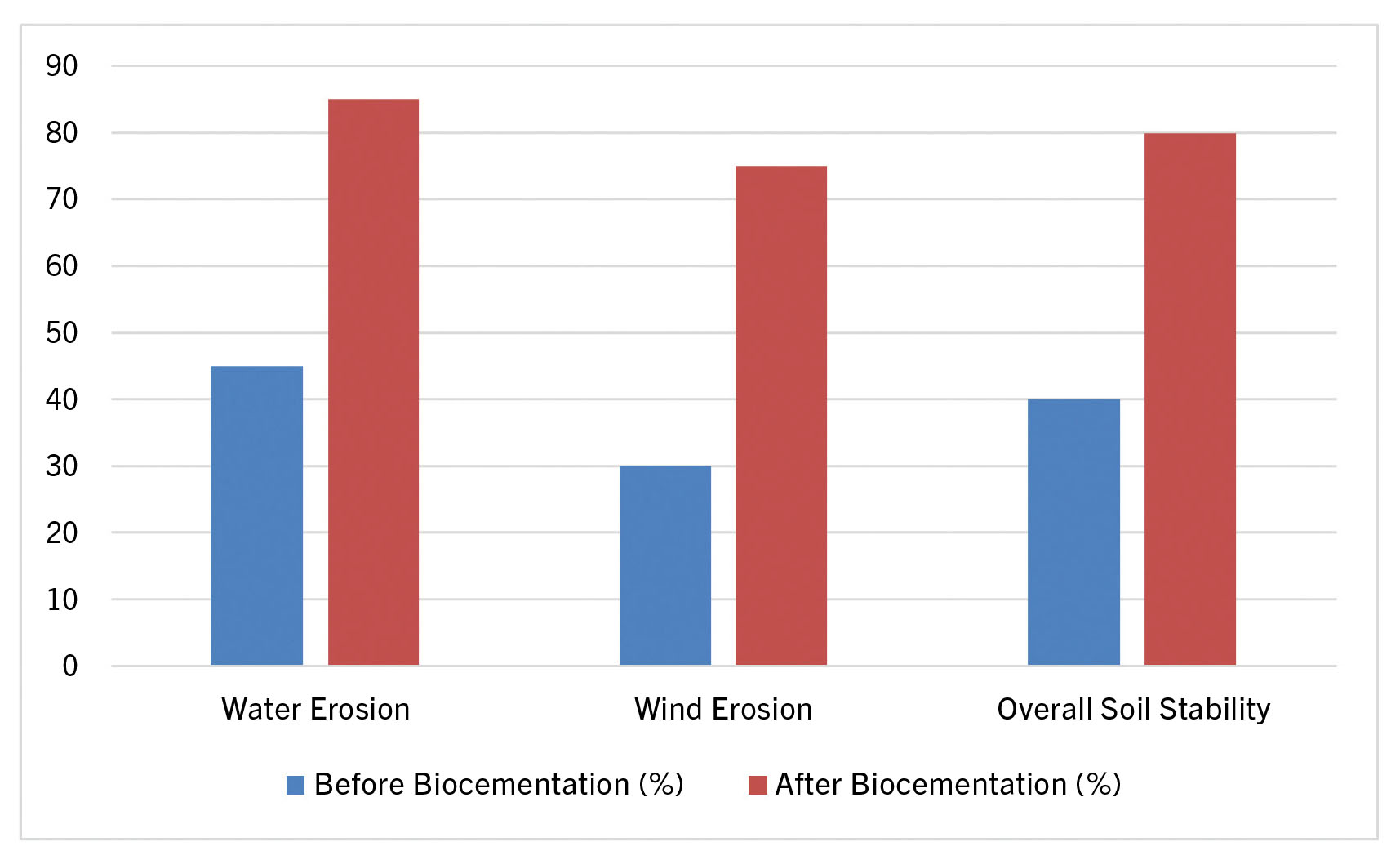
Tiwari et al. (2024) and Mohsenzadeh et al. (2024) achieved similar conclusions. The purpose of their studies was to provide an overview of the most common methods allowing the use of calcium carbonate to bind soil particles. This process helps to reduce the mobility of particles and increase the resistance of the soil to erosion by water, being important for sustainable land management and combating desertification. Tiwari et al. and Mohsenzadeh et al. discussed methods including soil compaction and pore filling with calcium carbonate, which leads to a decrease in soil permeability. These approaches create a stronger and more stable soil structure, which substantially affects its ability to retain water and prevent erosion. During the study, it was established that soil compaction and pore filling with calcium carbonate substantially reduce soil water permeability. This leads to a decrease in the amount of water that can penetrate into the soil and cause its erosion, which in turn increases the soil’s resistance to water erosion.
Yadollah-Roudbari et al. (2024) and Obi et al. (2024) considered conceptual obstacles to soil protection, noting that the cementing matrix formed by calcium carbonate substantially increases the adhesion forces between soil particles. This increased adhesion contributes to greater soil resistance to erosion by water, which is a critical aspect in the development of effective soil protection methods, which, as in this study, emphasises the importance of a comprehensive approach to soil protection. Such an integrated method allows considering all aspects of soil stability and provides more effective protection against erosion. The results of Yadollah-Roudbari et al. (2024) and Obi et al. (2024) indicate a lack of consistency in the preparation of samples of biocemented sand. These tests allowed to assess the resistance of samples to erosion and confirming the effectiveness of biocementation in improving the strength and stability of the soil. As part of the examination of soil resistance to erosion, comprehensive tests are conducted. Devices simulating rain or water flow are used to determine the extent of soil erosion. In real conditions, areas with biocemented soil are created. Soil conditions are monitored during and after rains or irrigation to assess how effectively the biocement resists water erosion. Plots with biocemented soil and control plots without biocementation are compared. In this study, the importance of analysing the parameters of erosion, the volume of washed soil, and the changes in the soil structure was considered. The assessment of these parameters allows a better understanding of the mechanisms affecting the resistance of cemented soil to water erosion and the development of more effective methods of protecting soil territories from desertification.
In the same path, studies were conducted by Gan et al. (2024), Wangchu et al. (2024), and Wang et al. (2023). These authors developed a new mechanism to ensure accuracy, thanks to which the formation of calcium carbonate contributes to the long-term strengthening of the soil. This reduces the need for frequent re-treatments, providing sustainable protection of soil areas from erosion. Their work highlighted the need to integrate advanced technologies, as the use of microorganisms and natural processes makes the biocementation method safe for the environment. This approach not only ensures effective soil strengthening but also minimises the negative impact on ecosystems, contributing to sustainable development and protection of natural resources. This is important for the development of more reliable methods of soil strengthening, as biocementation may be a more cost-effective method compared to traditional methods of soil stabilisation. The use of biocementation not only reduces costs but also ensures the stability and durability of fortified areas, making it the preferred choice for protecting sandy and eroded soils. Using a scanning electron microscope (SEM), it was determined that calcite is formed during the biocementation process, and its amount increases depending on the volume of the introduced nutrient medium. The basis of the biocementation process is the activity of microorganisms, such as the Bacillus genus. In this paper, the key aspects in which bacteria secrete urease, an enzyme that breaks down urea into ammonia and carbon dioxide, which contributes to the formation of calcium carbonate and soil strengthening, were examined. In the presence of calcium ions, carbon dioxide reacts with them to form calcium carbonate (calcite). A nutrient medium containing the necessary trace elements and organic substances supports the vital activity of bacteria.
Studies by Al-Mohamed et al. (2023) and Hamza et al. (2023), like in this work, were aimed at increasing the level of knowledge in the field of biocementation, demonstrating that the more nutrient medium, the more active the bacteria, and therefore the more calcite they produce, contributing to the strengthening of the soil. These authors assessed the risks and used SEM to observe the microstructure of the calcite formed, which allowed the detailed examination of the process of biocementation and its effect on soil strengthening. As a result, observations were made that showed that calcite forms crystalline structures around grains of sand under a microscope, effectively filling pores and binding particles together, which helps to increase the strength and stability of the soil. The accumulation of calcite improves the mechanical properties of the soil, making it more resistant to erosion. Calcite acts as a natural cement that holds sand particles together, increasing their strength and reducing mobility. Thus, SEM investigaations provided convincing evidence that the biocementation process effectively improves the mechanical properties of sandy and eroded soils, especially with an increase in the volume of the nutrient medium. This study examines various approaches, and this discovery is important for the further development of environmentally friendly methods of soil strengthening, ensuring the stability and durability of soil structures. In this study, various methods of introducing nutrient medium into the sand were evaluated to enhance biocementation and strengthen the soil. One of these methods was the addition of a nutrient medium through the lower part of the sand sample under pressure. This method assumed that the nutrient medium would evenly be distributed throughout the entire volume of sand, providing optimal conditions for the growth of microorganisms and subsequent precipitation of calcium carbonate.
Amadi et al. (2023) came to similar conclusions using a different approach by investigating the effect of adding a nutrient medium through various approaches. The experiment results indicated that adding through the lower part did not produce significant outcomes compared to adding through the upper part. They investigated that the nutrient medium can unevenly be distributed in the volume of sand, which can lead to insufficient nutrition of microorganisms in certain areas. Strategies and recommendations were developed indicating that when the nutrient medium passes through the entire volume of sand, the pressure may decrease, which in turn reduces the efficiency of nutrient distribution. In general, our results significantly contribute to understanding that feeding the nutrient medium from the lower part leads to rapid pore filling, which decreases the overall efficiency of medium distribution. In contrast, the use of the upper method demonstrated slower, more uniform nutrient penetration, creating better conditions for microorganism growth and more consistent calcium carbonate precipitation, as identified in our study. This indicates that introducing the nutrient medium through the upper part of the sand is a more effective method, ensuring better distribution and more efficient soil strengthening. These findings highlight the advantages of the upper feeding method in enhancing biocementation processes in soil.
The introduction of gradual addition of a nutrient solution was recommended as a result of this study. This approach contributes to the efficient process of sand biocementation, ensuring optimal distribution of nutrients and maintaining high bacterial activity. It was also established that the use of a non-sterile medium does not negatively affect the activity of bacteria and the amount of calcite formed. This confirms the possibility of using non-sterile conditions for the successful implementation of the biocementation process.
The limitations of this study are various climatic conditions that can affect the effectiveness of bio-cementing agents, which requires the adaptation of techniques to specific weather conditions.
CONCLUSIONS
During the study, it was confirmed that the use of non-sterile conditions is not an obstacle to the successful process of sand biocementation. This is important for the practical application of the method in conditions where ensuring sterility is difficult or impractical. It was determined that the application of calcium carbonate deposition to strengthen sand using a microbiological approach has become a widespread and thoroughly studied phenomenon. This method is an effective means of improving the mechanical properties of sand, making it more resistant to various types of erosion and other negative environmental factors.
The present work also confirmed that compliance with standards plays an important role in the process based on the ability of microorganisms to catalyse the formation of calcium carbonate around sand grains. This process contributes to the creation of a strong and stable cementing matrix, improving the mechanical properties of sand and increasing its resistance to various influences, including erosion. Effective methods that can substantially improve the mechanical properties of sand, making it more resistant to various external influences, were analysed and examined, including water and wind erosion. Optimising biocementation processes and developing effective methods and conditions for an efficient deposition of calcium carbonate in sandy environments are of pivotal importance. Currently, the biocementation method plays a key role in biotechnology. This method not only helps to strengthen sandy soils but is also important in modern geotechnics and environmental sustainability. Regular training of specialists in the use of bio-cementing technologies has played a relevant role in maintaining the effectiveness of the soil strengthening method, making it not only economically attractive but also promising when compared to the traditional technologies.
Further research in this area may include the development and testing of new methods and technologies for biocementation using natural microorganisms that contribute to the precipitation of calcium carbonate. This includes improving the method to make it environmentally safe by minimising environmental impacts compared to chemical methods that may contain toxic components. An analysis of the impact of this method shows that it requires relatively low costs for materials and energy since it uses natural biological processes.